Securing the AI Behind the Battery: Notes on ACCURE Battery Intelligence at ees Europe 2026
ACCURE's analytics platform watches gigawatt-hours of battery storage in real time. We sat down at their ees Europe booth to talk about what happens when the models doing the watching become the target.
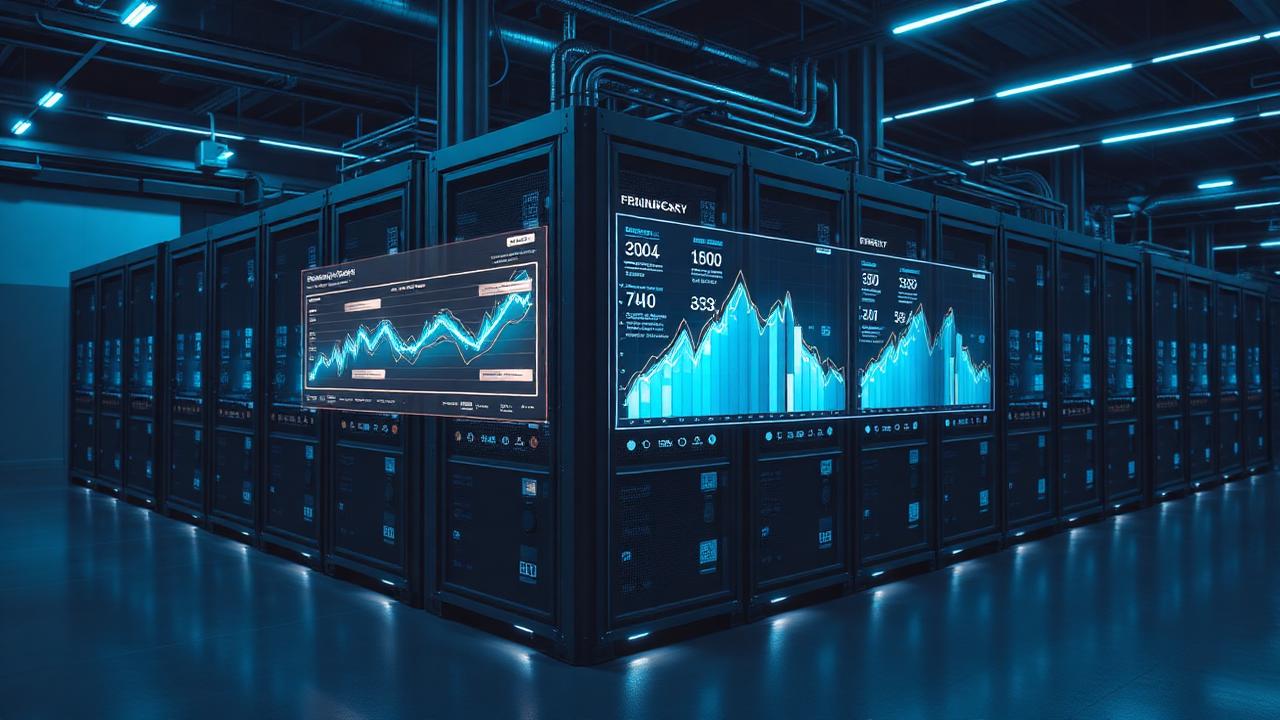
Booth B2.380, Hall B2, ees Europe. ACCURE Battery Intelligence — the Aachen-founded, now globally deployed battery-analytics SaaS — was showing what a modern battery operations center actually looks like in 2026: a live map of hundreds of connected battery systems, per-cell state-of-health estimates, thermal-runaway warnings ranked by severity, and an ML model quietly forecasting each site's remaining useful life. On their own booth blurb the pitch is deliberately understated: "reduce risk, improve performance, and maximize the business value of battery energy storage." The uncomfortable follow-up question, and the reason we walked over, is what happens when the models doing the risk reduction become the risk.
Why battery analytics is now a security problem
ACCURE and companies in the same category (TWAICE, Voltaiq, Powin's in-house stack) sit in a very specific place in the value chain. They ingest telemetry from BMS units across many operators, run learned models on top of it, and hand back operator-facing recommendations: derate this string, pull this container out of dispatch, replace these modules before Q4. Those recommendations increasingly flow directly into dispatch software and warranty decisions worth eight and nine figures.
That makes three things simultaneously true. The telemetry pipeline is a high-value data asset. The recommendation output is a control signal that touches real hardware. And the model in the middle is a piece of software that — like any other — has an attack surface. In the vocabulary of ISO/IEC 27001 Annex A and the EU AI Act's Article 15, this is exactly the class of "high-risk AI system" whose robustness and cybersecurity must be demonstrable, not assumed.
Three failure modes we discussed on the floor
1. Data poisoning through a compromised BMS firmware update
A battery analytics model is only as trustworthy as the telemetry it trains and infers on. If an attacker with a foothold in a BMS vendor's OTA pipeline can nudge voltage or temperature reporting by a fraction of a percent across a fleet, the downstream model quietly relearns a wrong baseline. Warranty decisions and thermal-runaway warnings degrade in ways that are invisible on a dashboard and expensive on an insurance claim.
2. Prompt injection in operator copilots
Every serious player in this space is now shipping — or piloting — an LLM copilot on top of the analytics layer ("why did container 14 derate last night?"). That copilot reads ticket text, DSO messages, vendor advisories and PDF service reports. Every one of those inputs is an indirect prompt-injection vector, and the copilot sits next to a recommendation engine that can influence real setpoints.
3. Model extraction via the API
Battery-health models are commercial IP built on years of proprietary field data. A rate-limited public API is not, by itself, a defense against extraction attacks — the academic literature on model stealing (Tramer et al., Papernot et al., and more recent work on stealing production LLM embeddings in 2024) is now well beyond the proof-of-concept stage.
Where TrendGuru fits
Our thesis for the partnership conversation was narrow and specific. TrendGuru does not do battery physics. ACCURE does not — and should not have to — build a bespoke AI red-team practice. The overlap is clean:
- Model-supply-chain assurance. Continuous scanning of the third-party model artifacts, tokenizers and dependencies used inside the analytics pipeline against known-bad hashes and typosquat patterns.
- Copilot red-teaming. Structured indirect-injection test suites executed against the operator-facing LLM, with regression tracking release-over-release.
- Recommendation-output monitoring. Anomaly detection on the recommendations themselves — sudden, unexplained shifts in derate rates across a fleet are cheaper to catch as data drift than as a warranty dispute.
- Auditability. Immutable logs of every model input, decision and operator-facing output, mapped to IEC 62443-3-3 and EU AI Act Article 12 evidence requirements.
The bigger picture
ACCURE's ees Europe booth was busy for a reason. The European Market Outlook for Battery Storage 2026–2030 that SolarPower Europe released the week of the show projects the European BESS fleet to more than double by 2030, with utility-scale leading. Every one of those gigawatt-hours will be operated with the help of a learned model somewhere in the loop. Securing those models is not a niche concern; it is the operational-risk story for the next decade of grid-scale storage.
If the model decides which battery gets dispatched tomorrow, then the model is part of the safety case. Treat it that way.