Field Report: TrendGuru at The smarter E Europe 2026 in Munich
Three days on the floor at Europe's largest energy-industry alliance in Messe München — what we saw across solar, storage, e-mobility, and why AI security is quietly becoming a grid problem.
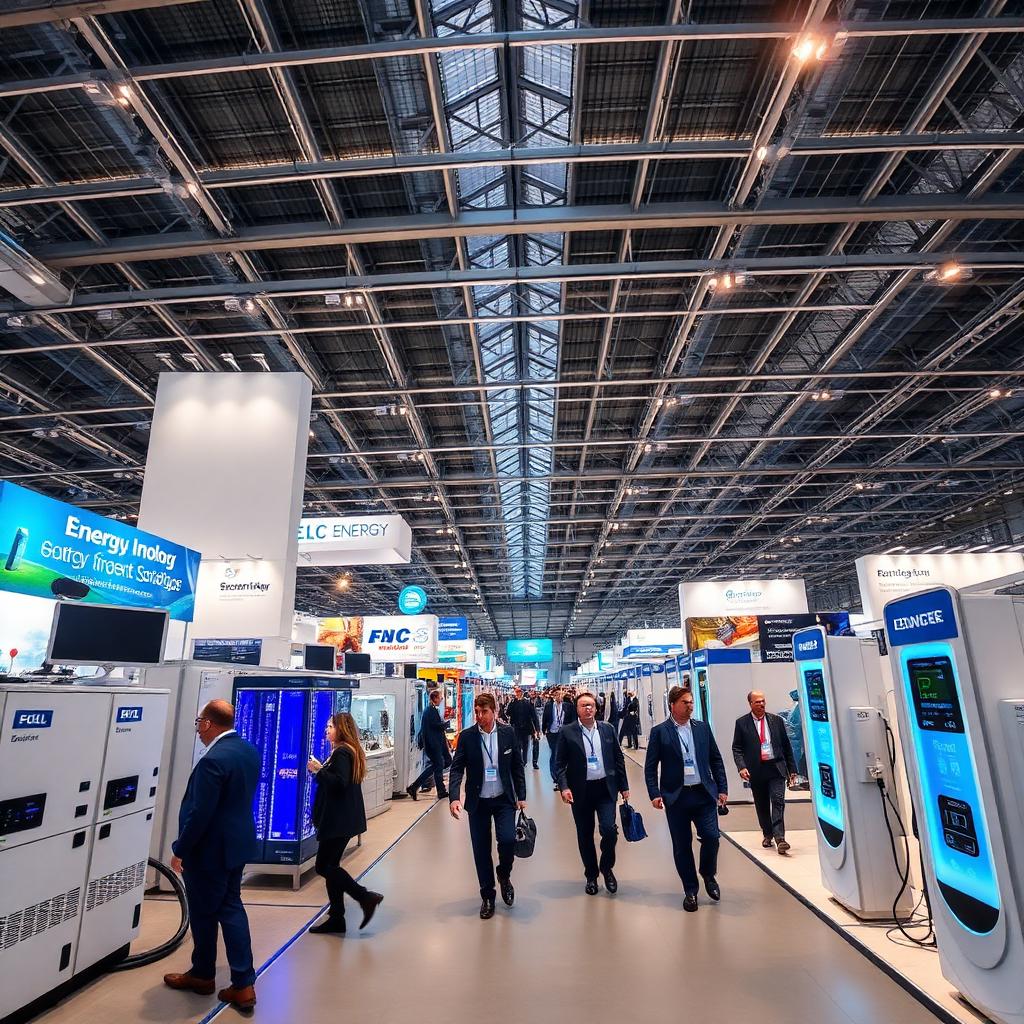
From June 23 to 25, 2026, we joined roughly 115,000 visitors and 3,000+ exhibitors from more than 160 countries at Messe München for The smarter E Europe — the umbrella event that gathers Intersolar Europe, ees Europe, Power2Drive Europe and EM-Power Europe into a single, sprawling energy-transition campus. Seventeen halls. Roughly 220,000 square meters of exhibition space. A steady, low-frequency hum of inverters, forklifts and simultaneous translation.
TrendGuru was there because a message we started hearing from customers eighteen months ago has now become impossible to ignore: the energy transition is, functionally, a software transition — and every software transition is also a security transition. Below are the trends we watched land in Munich, and where we think the AI-security story fits into a show that, on the surface, is about electrons.
1. Battery storage stopped being a side hall
The single most visible shift versus 2024 was the sheer footprint of ees Europe. Utility-scale BESS containers dominated multiple halls, and every serious inverter vendor now ships a matched storage line. The context matches the numbers: SolarPower Europe's *European Market Outlook for Battery Storage 2026–2030*, released the week of the show, projects the European BESS market to more than double by 2030, with utility-scale installations leading growth as capacity markets and ancillary-service revenues finally clear the business case.
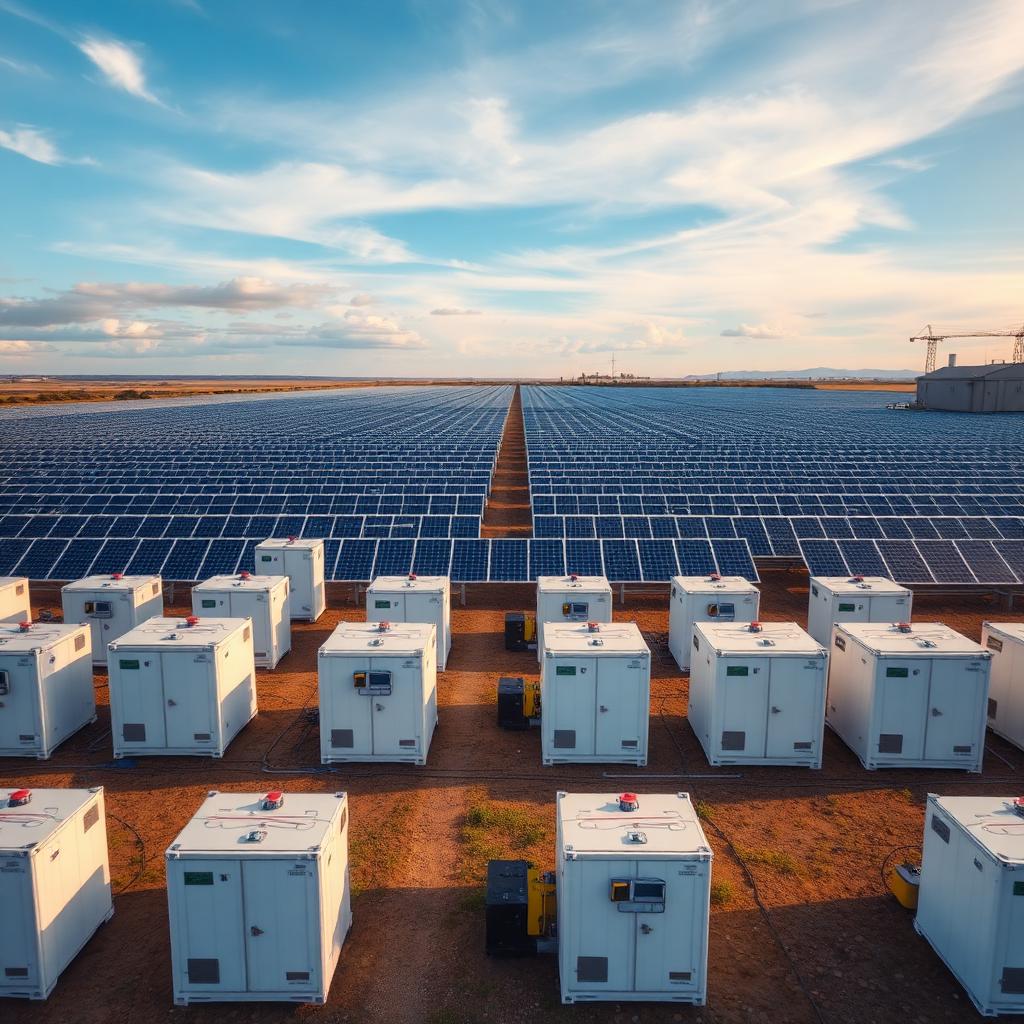
The security subtext, which almost no one on the floor was talking about: a 100 MW BESS site is a distributed control system with a cellular modem, a cloud connection, and — increasingly — an AI-driven dispatch layer optimizing against forecasted prices. That is a new, high-consequence attack surface, and the industry's threat model has not caught up.
2. Power2Drive: EV charging is now a data business
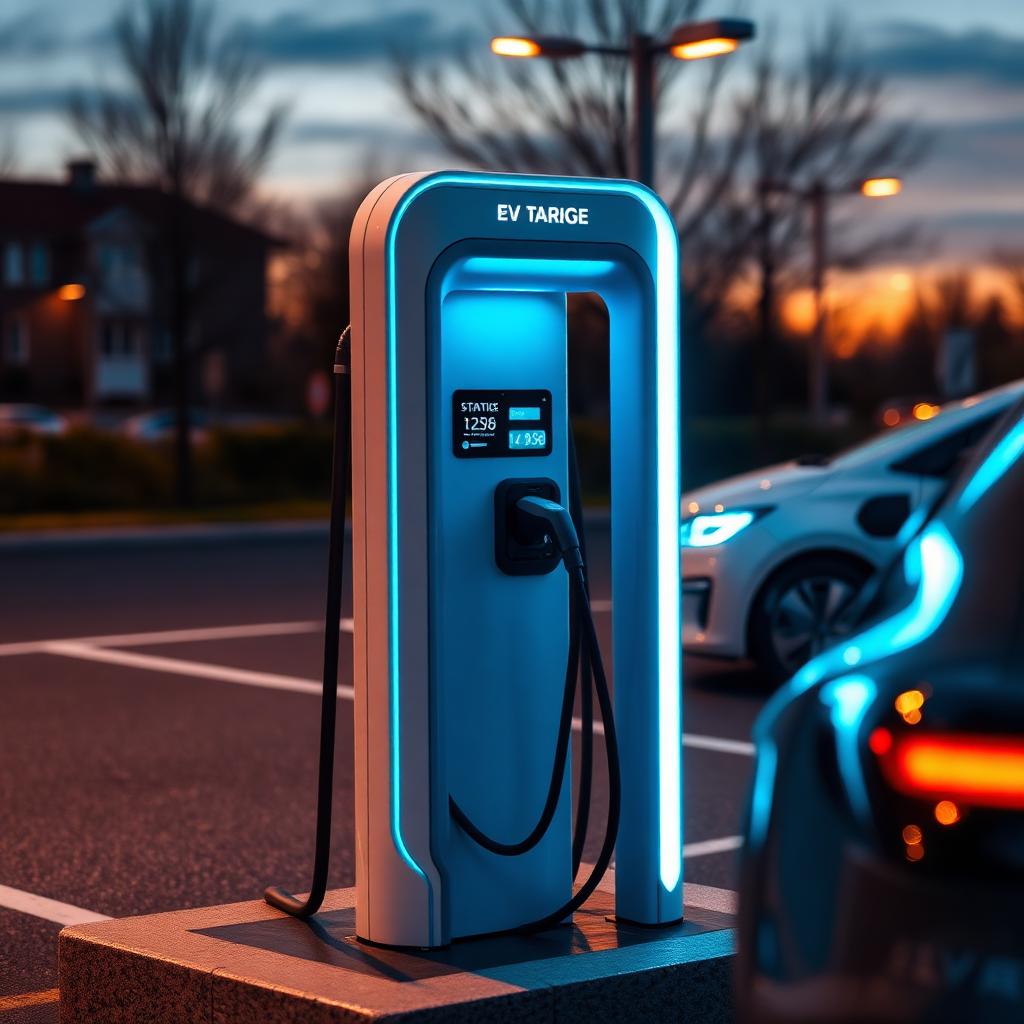
Power2Drive Europe was, unsurprisingly, packed. What surprised us was how much of the booth conversation had migrated from hardware specs to backend software: OCPP 2.0.1 rollouts, ISO 15118-20 plug-and-charge, dynamic tariff integration, and — the theme of the show for us — Vehicle-to-Grid (V2G).
Podcast episode 260 of the official The smarter E podcast, recorded on-site, framed it well: cars are becoming batteries on wheels. Bidirectional charging turns a parked EV into a grid asset that can absorb midday solar and discharge into evening peak. The economics are close to working; the standards are almost there; the cybersecurity story is barely started.
If your car can push power back into the distribution grid, then the authentication path between the vehicle, the charger, the CPO backend and the DSO is a safety-critical control loop — not just a billing convenience.
3. Perovskites, tandem cells and the long PV roadmap
Intersolar Europe's technical program leaned heavily into next-generation photovoltaics. HZB researchers Rutger Schlatmann and Angelika Harter (episode 258 of the podcast) laid out where perovskite–silicon tandem cells actually stand: lab efficiencies above 33%, first commercial pilot lines running, and a realistic path to 30%+ modules in the field before 2030. That is a big deal for land-constrained European projects.
The uncomfortable follow-up, on which the exhibition was mostly silent: the manufacturing supply chain for these next-gen cells will run on AI-optimized process control and predictive maintenance. Model integrity, data provenance, and prompt-injection resistance in operator copilots are not abstract concerns for a fab pushing tandem cells at scale.
4. The award list is a useful map
The smarter E AWARD 2026 winners, announced during the show, are a decent shorthand for where the industry itself thinks the frontier is: high-efficiency tandem PV, second-life battery integration, AI-driven virtual power plants, and fast-DC charging optimized for heavy-duty fleets. Four out of five of those categories have a non-trivial software and AI component. That is the story in one sentence.
5. What TrendGuru took away
We came to Munich to listen, not to sell. Three things we are taking home:
- Grid-edge AI is arriving faster than grid-edge security. VPPs, BESS dispatch, EV smart-charging orchestrators — all now shipping with LLM-assisted operator tooling. The threat models we publish for enterprise LLM deployments transfer, almost line for line, to this domain.
- Standards will catch up, unevenly. IEC 62443 for OT, ISO/SAE 21434 for automotive, NIS2 for critical infrastructure operators, and the EU AI Act's Article 15 for high-risk AI systems all touch this space. None of them, on their own, cover the full stack end to end.
- The conversation is starting. We had more substantive security conversations at ees and Power2Drive in three days than in the previous year of energy-industry calls combined. That is a leading indicator.
Practical: a short checklist if you operate energy-adjacent AI
For utilities, aggregators, CPOs and storage operators shipping AI-driven control or optimization:
- Inventory every model in the dispatch, forecasting and customer-support paths. Know provider, version, and last evaluation date.
- Treat any operator-facing LLM as an untrusted-input surface: trouble tickets, DSO messages, market signals and even weather-provider text can carry indirect prompt injection.
- Segment the AI runtime from SCADA and the DMS with hardware-enforced boundaries. Do not co-locate an internet-reachable model host with a control network.
- Log every AI decision that touches setpoints. Store the log outside the model's reach.
- Align now with IEC 62443-3-3 SL2+ for the AI runtime, and treat the EU AI Act Article 15 obligations as a floor, not a ceiling.
Where we go next
The next edition of The smarter E Europe runs June 8–10, 2027, with the conference program on June 7–8. Between now and then we will be publishing a longer piece on the AI-security threat model for virtual power plants, and a companion note on securing V2G authentication flows end-to-end. If you are working on either problem, we would like to hear from you.
Munich was, in a real sense, a preview of the next decade of critical infrastructure. The physical layer is arriving on schedule. The security layer around the AI that will run it is not — yet.